
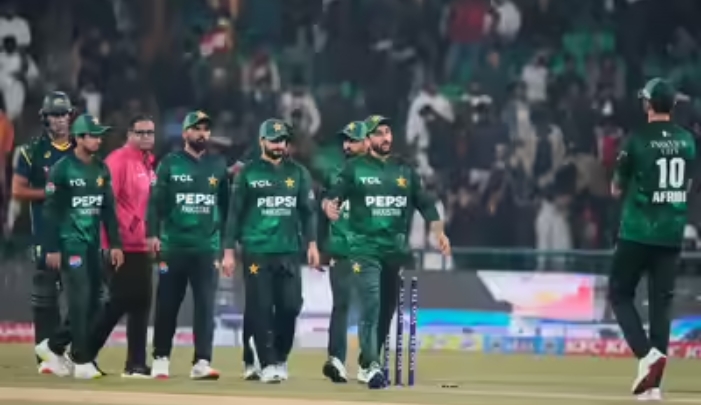
ISLAMABAD / COLOMBO — Tensions are brewing regarding Pakistan’s participation in cricketing events following former Pakistan captain Rashid Latif’s suggestion to Pakistan consider taking an anti-Indian position by boycotting playing in a game against India. Latif’s position furthers the already contentious environment of both cricket and politics regarding what position Pakistan should take to counter decisions by the International Cricket Council (ICC) concerning India.
Latif is of the opinion that Pakistan should not play against India should the government issue an anti-Indian directive. Latif is asked what should be done if Pakistan is to face India in the final of the T20 World Cup; he responds in the affirmative if asked the question in the negative to say that they will not play.
Acknowledging that momentum has been lost to his ‘call to boycott the T20 World Cup’, Latif still believes an opportunity still exists to selectively boycott matches to protest what he believes to be the correct position. It is Pakistan’s government and not the Pakistan Cricket Board (PCB) that Latif believes should make this call.
Latif’s adjusted position comes as tensions rise with the ICC over the tournament’s fixtures and locations. After Bangladesh was removed from the tournament when its cricket board refused to play matches in India over security concerns, the ICC replaced them with Scotland, an action Pakistan strongly criticized and supported at first.
Latif suggests the Pakistan cricketing authority missed the chance to do a full boycott when the situation first erupted. “The time for a strike has passed. Every decision has a timing. When the iron is hot, that’s when you strike. That time was last week during the ICC meeting.”
Government vs Cricket Board: Who Will Decide?
Latif’s statements raise the question of who in the end has power over Pakistan’s participation. PCB Chairman Mohsin Naqvi has stressed that the government will decide, not just the board. Naqvi has reportedly briefed Prime Minister Shehbaz Sharif on the situation and possible actions. A decision is believed to be coming “by Friday or next Monday.”
The involvement of Pakistani politicians is evidence of how much the issue is focused on the intersection of sports and politics. Considering Latif’s statements and the fact that a unilateral withdrawal by the PCB is unlikely due to possible ICC sanctions, the PCB would have to wait for government approval to act.
Proposed Boycott and Possible Consequences
Latif’s suggestion that Pakistan refrain from playing India in the group stages or knockout phases of the tournament attracts considerable attention, particularly in light of the ICC’s reputation and the finances involved. Matches are highly commercially viable since the India-Pakistan contests are arguably the most profitable in international cricket. Some have suggested that a withdrawal from these matches would compromise the ICC and its governance of cricket.
Cricket analysts argue that cricket boards have very little legal latitude in boycotting an event at their own discretion. Impact on the boards is unavoidable. Participation agreements by the ICC are legally enforceable and, even if politically motivated, skipping an event can result in board sanctions, fines, or even being barred from future tournaments. The PCB may try to position such a refusal not as a board decision, but rather a dictated government decision, to prevent the board from being penalized.
Reactions from Cricketing Figures
Criticism has been drawn on the proposal from outside of Pakistan. In a sports show, Former Indian cricket team captain Ajinkya Rahane, when referring to the possibility of Pakistan instigating such a protest, stated, “I don’t think they can do that, I don don’t think they have, am I allowed to say guts?” He further added that Pakistan is expected to play in the World Cup.
The protest highlights a lack of ICC functionality in implementing procedures to navigate the complex web of geo-political landscapes surrounding cricket. The ommission of Bangladesh and the siding with Pakistan from the protest highlights the inequities within the stated and implied functions of a host nation.
Former Indian batsman Suresh Raina criticized the Bangladesh board for not playing in India and warned Pakistan about the same. Raina said ignoring international fixtures could lead to an ICC ban, stressing the Indian market and the revenue it generates for world sporting events.
PCB’s Position and Team Preparations
Amid the acting drama, the PCB’s position remains clear: the ultimate call will be based on government instructions. World Cup preparation is still on. Reports say the squad is already finalized, and plans to fly to Colombo—one of the co-hosts—are in motion. Reports say Pakistan is set to compete in the World Cup despite the political tension.
Considering the increased rhetoric, sources close to PCB say that despite the international headlines, boycott talk is likely to be largely rhetoric. No government order will prevent Pakistan from playing India, and the board is not going to get into a prolonged standoff with the ICC. Pakistan’s international cricketing future is in their hands, and the board is likely to feel possessively about it.
Global Cricket Implications
The incident has attracted interest outside the borders of Pakistan and India, with cricket officials and other interested parties monitoring the situation. The T2O World Cup is considered one of the biggest events in cricket, and disruptions to the event, particularly with major matches, can have serious implications in the commercial and administrative front of the sport.
With the tournament fast approaching, attention shifts to Islamabad to see if Latif’s proposal will stay as words with no action, or if it will crystallize into an official stance with the backing of the state.