
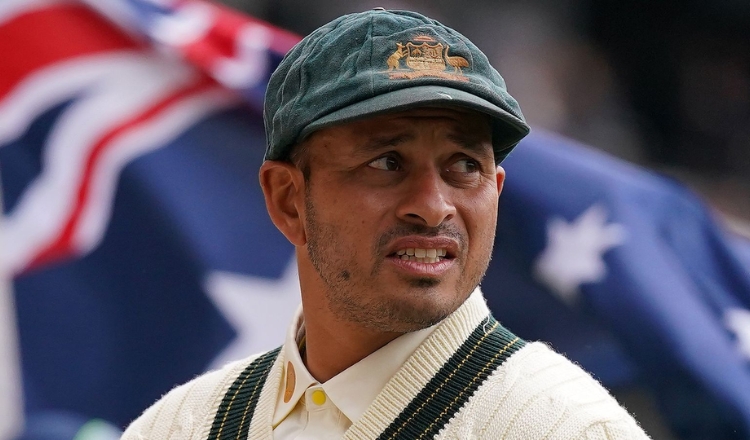
Australian opening batsman Usman Khawaja has announced his retirement from international cricket and confirmed the final and fifth Ashes test against England in the Sydney Cricket Ground (SCG) will be the final game in his career as a Test player. The 39-year old made the announcement in a press conference held at the SCG which is the place where the Australian played the debut of his Test debut in the year 2011, and brings his international journey full circle on the place where it started.
Khawaja has informed Cricket Australia and his teammates about his decision before the match, explaining that the timing was appropriate due to his physical and age and the natural transitional period within the national side. The decision comes after months of speculation about his future, amid injuries as the series continues. Ashes series.
A Career That Began and Ends at the SCG
The Test career of Khawaja began during his decade 2010-11 Ashes series, during which the Pakistani made his debut with England in the SCG. 15 years later that same spot will be hosting his final appearance. In the course of this time, Khawaja established himself as one of the most technically competent left-handed batsmen and is renowned for his ability to withstand pace bowling and the ability to bat for prolonged periods of time in tough conditions.
He concludes in his career as a Test player with more than 6000 runs in the 88 matches played which includes 16 centuries as well as many half-centuries. He played an integral part in Australia’s batting lineup throughout different times.
Pakistan-Born Cricketer Who Made Australian History
In Islamabad, Pakistan, Khawaja was able to move into Australia along with his parents when he was a teenager and settled there in New South Wales. He was the first Pakistani-born and also the first Muslim player to play for Australia in the Test format which was an important moment in the history of Australian sport.
His continued presence and selection on the national team were often interpreted as a symbol of the changing culture and social scene. Khawaja has often talked about being a representative of not only Australia but also other communities previously experiencing little representation at the top levels of cricket.
Statement Reflecting Personal and Professional Journey
In announcing that he was retiring, Khawaja reflected on his journey through Australian cricket, recognizing both the encouragement and difficulties that he had to face throughout the course. He acknowledged his family’s contribution to their sacrifices, and said his career was defined by determination, perseverance and faith.
Khawaja was also adamant about the criticism he received in the recent Ashes series, specifically due to injuries-related absences. He claimed his opinion that a portion of comments that was directed at him had old-fashioned stereotypes, a problem which he claimed he’s encountered in various stages in his professional career.
Injury Concerns During the Ashes Series
Khawaja’s announcement of retirement comes after an extremely difficult Ashes campaign that was marked by physical challenges. He missed one test due to back spasms, and was not able to open his bowling in another, which led to an intense examination from certain sections of the media as well as former players.
The player stated that although injuries are commonplace in professional sports, the nature of the criticism that he was subjected to during this time confirmed his conviction that it was the right time to quit international cricket.
Contributions Across Formats
In in addition to his Test playing profession, Khawaja played for Australia with limited-overs cricket and played 40 One Day Internationals and nine Twenty20 internationals. Although Tests were his most popular format, he also played in the of Australia’s white ball set-up during crucial transitional periods as he contributed both with the bat and with his knowledge.
His versatility enabled him to adjust to various types of roles, however his focus was primarily Test cricket at the end stage in his playing career.
Late-Career Resurgence and Key Performances
One of the key aspects that Khawaja’s life has been his late-career revival. After a few years away from the Test team He fought his way back to the side with regular domestic performances and played numerous important innings. These included match-defining century both at home and away.
His two centuries at the SCG in the 2022 Ashes series are thought of as among the most impressive achievements of his professional career, confirming his status as a player who is capable of delivering when under stress.
Reactions to Cricket Australia and Teammates
Cricket Australia officials praised Khawaja’s contribution to the national team, and highlighted his leadership qualities, professionalism within the team, and his impact beyond his on-field performance. His teammates acknowledged him as a respected player in the dressing rooms and was praised for his calm manner and willingness to guide younger players.
Officials also acknowledged his contribution in promoting a greater representation of Australian cricket and also his work on the side of the field, through initiatives to support youth with diverse backgrounds.
Focus on Legacy and Off-Field Impact
Beyond the numbers, Khawaja’s life is closely linked to his advocacy for equality and inclusion in the field of sport. Through his declarations and his foundation He has always been adamant about issues of mental health, diversity and the role of cricket in ensuring opportunities for all.
As he gets ready for his last international game, the attention at the SCG is likely to go beyond the outcome of the Test match with a focus on a life that crossed generations, challenged norms and left a lasting impression in Australian cricket.
Final International Appearance in the Fifth Ashes Test
Five years after his death, the fifth Ashes test at the SCG will be Khawaja’s final match in international cricket. This fixture is significant because players, opponents and the public acknowledge the close of a life that was a combination of athletic excellence with a larger social impact.
Khawaja is scheduled to replace him on the top line for a final time, thereby concluding a journey that started at the same location over 10 years earlier.